
Hospitality and Events Form Templates
Daily checks and records for restaurants, hotels, venues and event organisers: food temperatures, opening and closing checks, cleaning audits and event risk assessments.
Out-of-range readings flag up straight away, and a full history is ready when the environmental health officer visits.
23 templates · 18 mobile · 5 online
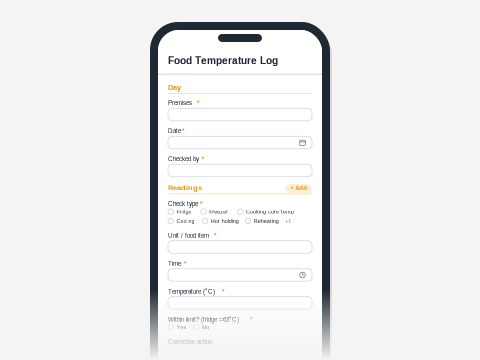 Food Temperature Log
Daily fridge, freezer, cooking, cooling and hot-holding temperatures with corrective actions.
Starter set
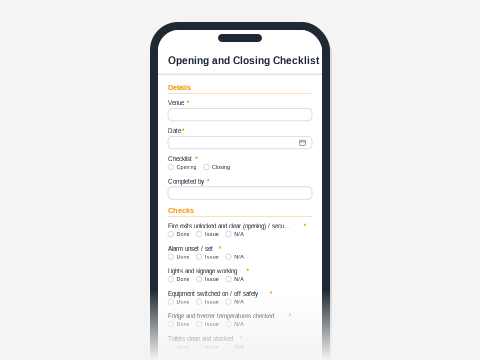 Opening and Closing Checklist
Daily opening and closing checks for a venue or kitchen: safety, security, equipment, cleaning and cash.
Starter set
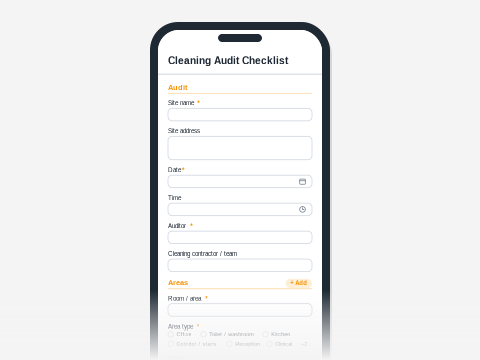 Cleaning Audit Checklist
Room-by-room cleaning quality audit with scores, photos and corrective actions, for contract cleaning and FM teams.
Starter set
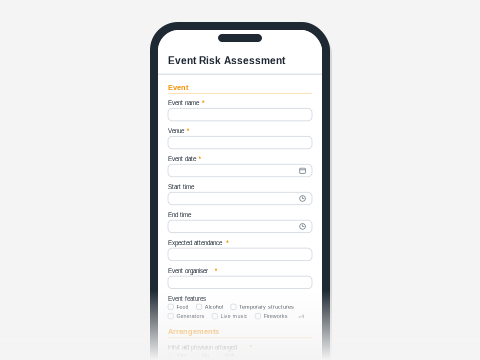 Event Risk Assessment
Risk assessment for an event: venue, attendance, crowd, weather, food, first aid, emergency plan and hazards.
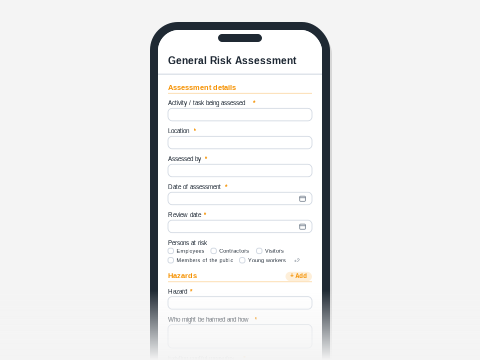 General Risk Assessment
Identify hazards, who might be harmed, existing controls and further actions, with a risk rating before and after controls.
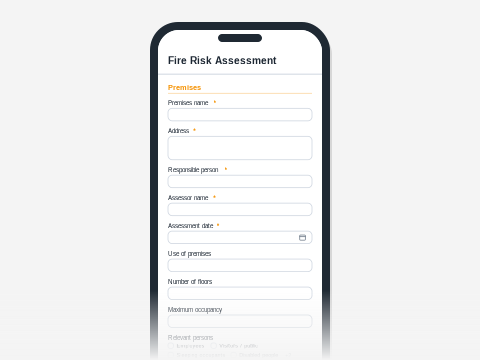 Fire Risk Assessment
Structured fire risk assessment: ignition sources, fuel, people at risk, means of escape, detection, management and action plan.
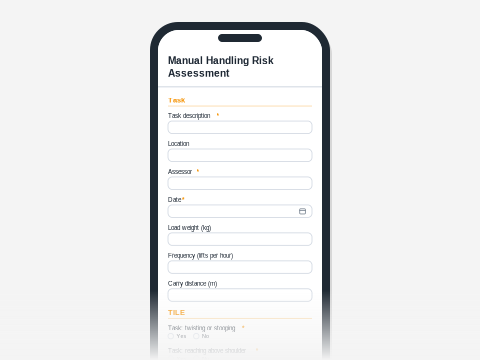 Manual Handling Risk Assessment
Assess a lifting or carrying task using TILE: task, individual, load and environment, with controls and residual risk.
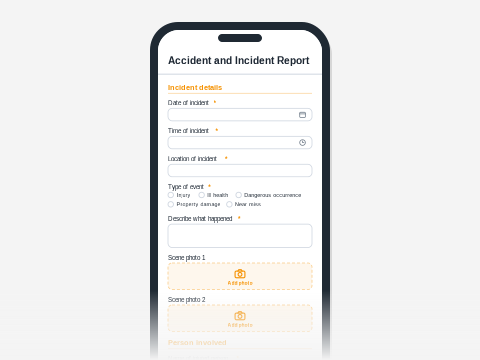 Accident and Incident Report
Record what happened, who was involved, injuries, first aid given, witnesses and whether the incident is RIDDOR reportable.
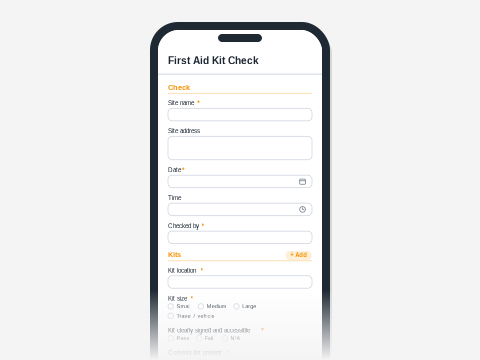 First Aid Kit Check
Monthly first aid kit check: contents present, in date, sealed and restocked, kit by kit.
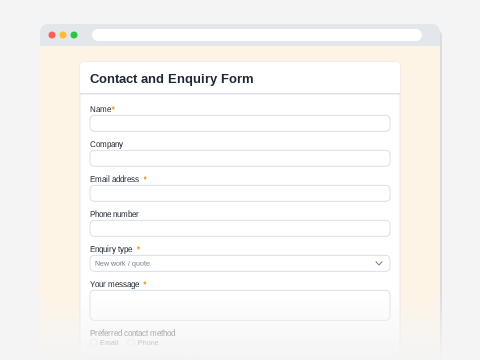 Contact and Enquiry Form
Website contact form: name, company, contact details, enquiry type, message and consent, ready to route to the right team.
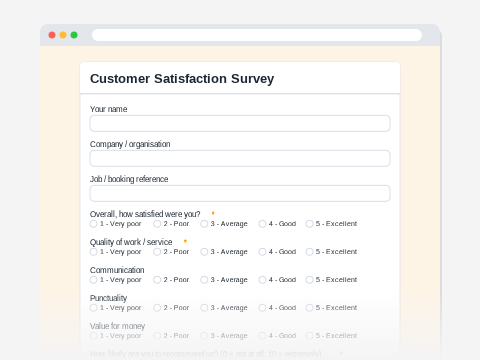 Customer Satisfaction Survey
Short post-job survey covering quality of work, communication, punctuality and likelihood to recommend.
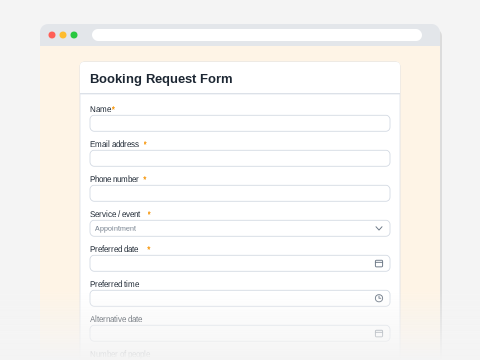 Booking Request Form
Online booking request: service, preferred dates and times, location, number of people and special requirements.
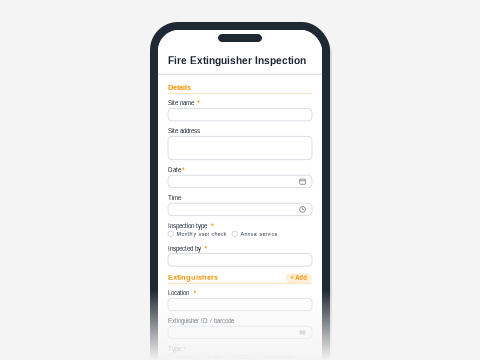 Fire Extinguisher Inspection
Monthly or annual extinguisher check: location, type, pressure, seals, damage and service date for each unit.
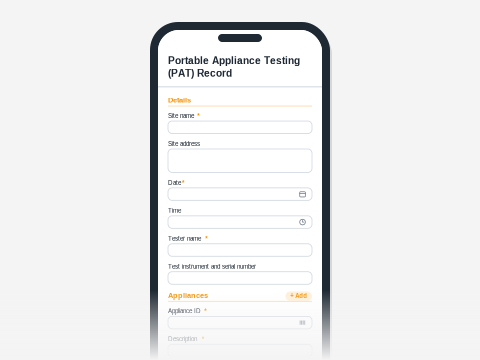 Portable Appliance Testing (PAT) Record
Appliance-by-appliance PAT record: ID, class, visual inspection, earth continuity, insulation resistance and result.
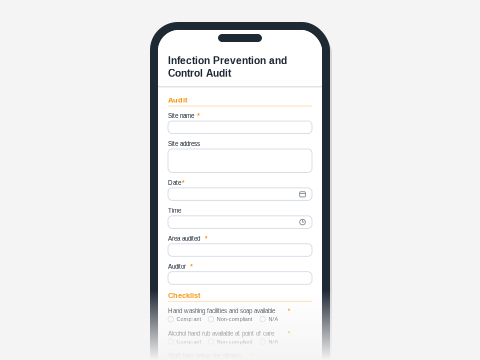 Infection Prevention and Control Audit
IPC audit covering hand hygiene, PPE, environment, equipment cleaning, sharps, linen and waste.
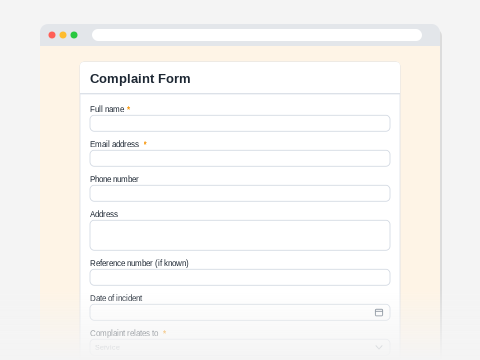 Complaint Form
Online complaint form capturing the complainant, what went wrong, desired outcome and supporting evidence.
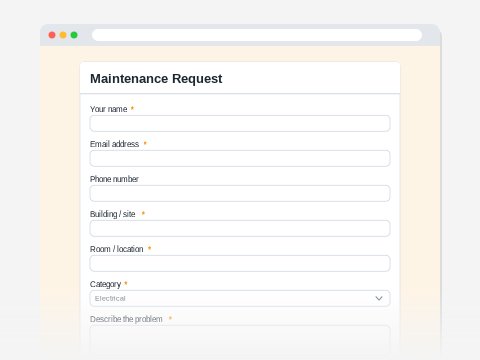 Maintenance Request
Online request for building or equipment repairs, with location, priority and photos, ready to become a job.
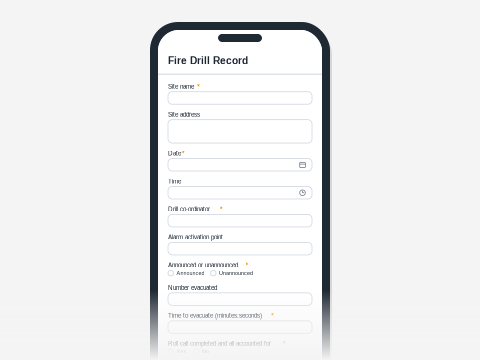 Fire Drill Record
Record of a fire evacuation drill: time to evacuate, roll call, problems found and lessons learnt.
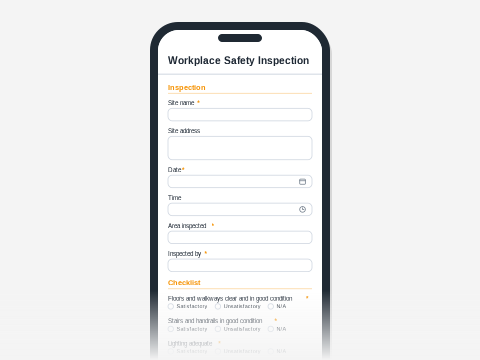 Workplace Safety Inspection
Routine walk-round inspection of housekeeping, access, fire safety, welfare, electrical safety and first aid.
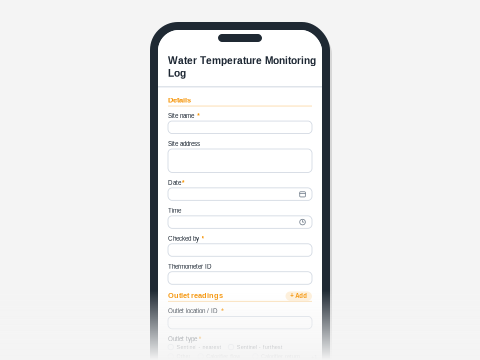 Water Temperature Monitoring Log
Monthly sentinel outlet temperature checks for legionella control, recording hot and cold readings against targets.
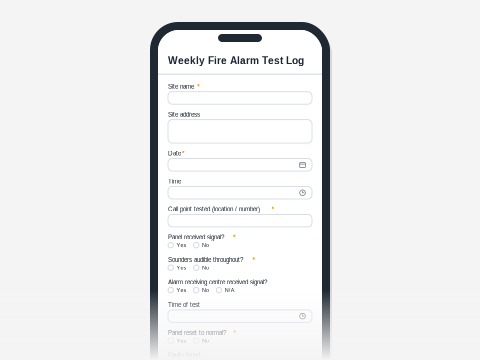 Weekly Fire Alarm Test Log
Weekly user test of the fire alarm from a different call point each week, confirming sounders and ARC signalling.
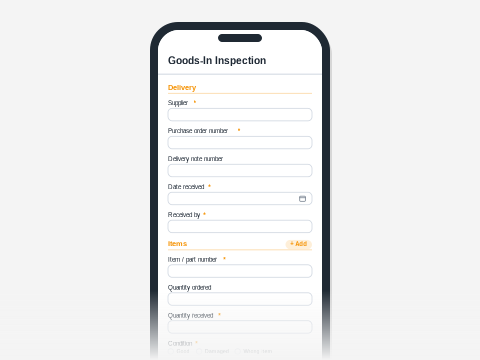 Goods-In Inspection
Check deliveries against the purchase order for quantity, damage, documentation and certificates of conformity.
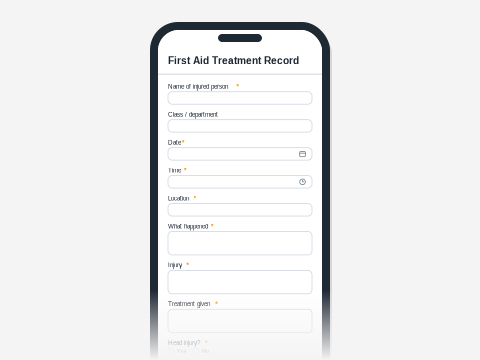 First Aid Treatment Record
Record each first aid treatment: who, what happened, injury, treatment given, and whether parents or carers were informed.
Regulations these templates help you record
- Food Safety Act 1990 and Food Safety and Hygiene (England) Regulations 2013: food businesses must have food safety procedures based on HACCP principles and keep records.
- FSA Safer Food, Better Business: the Food Standards Agency's food safety management pack for small businesses, including daily diary records.
- Regulatory Reform (Fire Safety) Order 2005: fire risk assessment, escape routes and equipment checks.
- The Purple Guide: industry guidance on health, safety and welfare at events.
- Terrorism (Protection of Premises) Act 2025 (Martyn's Law): larger venues and events will need public protection procedures; the Act is expected to come into force in 2027.
Hospitality & Events template FAQs
What temperature should a fridge be?
In England the legal limit for chilled food is 8°C, but the FSA recommends keeping fridges at 5°C or below. Freezers should be at -18°C or colder.
How hot should food be cooked and held?
Cook food until the core reaches 75°C (or an equivalent time and temperature, such as 70°C for two minutes) and hot-hold it at 63°C or above.
How long should food safety records be kept?
Keep them for at least as long as the food could be in use, and in practice for 12 months or more, so you can show an inspector your checks have been consistent.
Does every event need a risk assessment?
Yes, proportionate to the size and nature of the event. Larger events also need an event management plan covering crowd management, emergencies and welfare.